Osiris
Our highest and fastest vehicle to date.
What it did.
Figures come from the onboard flight computer.
- Apogee
- 33,551 ft feet above ground level
- Max velocity
- Mach 1.92 at burnout
- Max acceleration
- 16.1 G peak, from flight data
- Length
- 3.2 m (124.8 in) overall, tip to tail
- Liftoff mass
- 13.4 kg dry / 29.9 kg wet fuelled, with payload
- Motor
- CTI O3400 designation and impulse class
- Recovery
- 3 ft drogue @ apogee · 10 ft main @ 1373 ft drogue and main configuration
- Result
- 1st, Payload Challenge
How it was made.
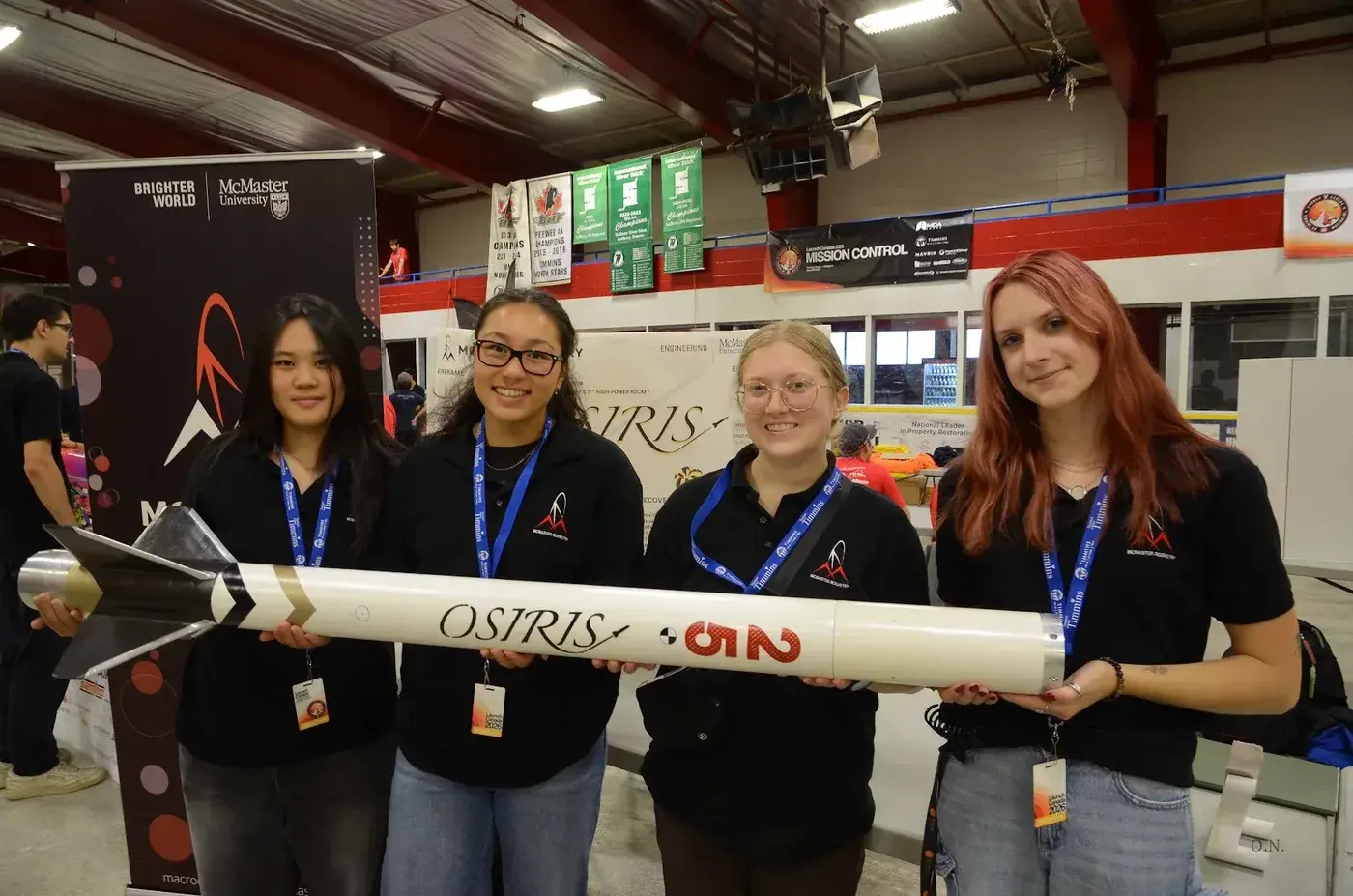
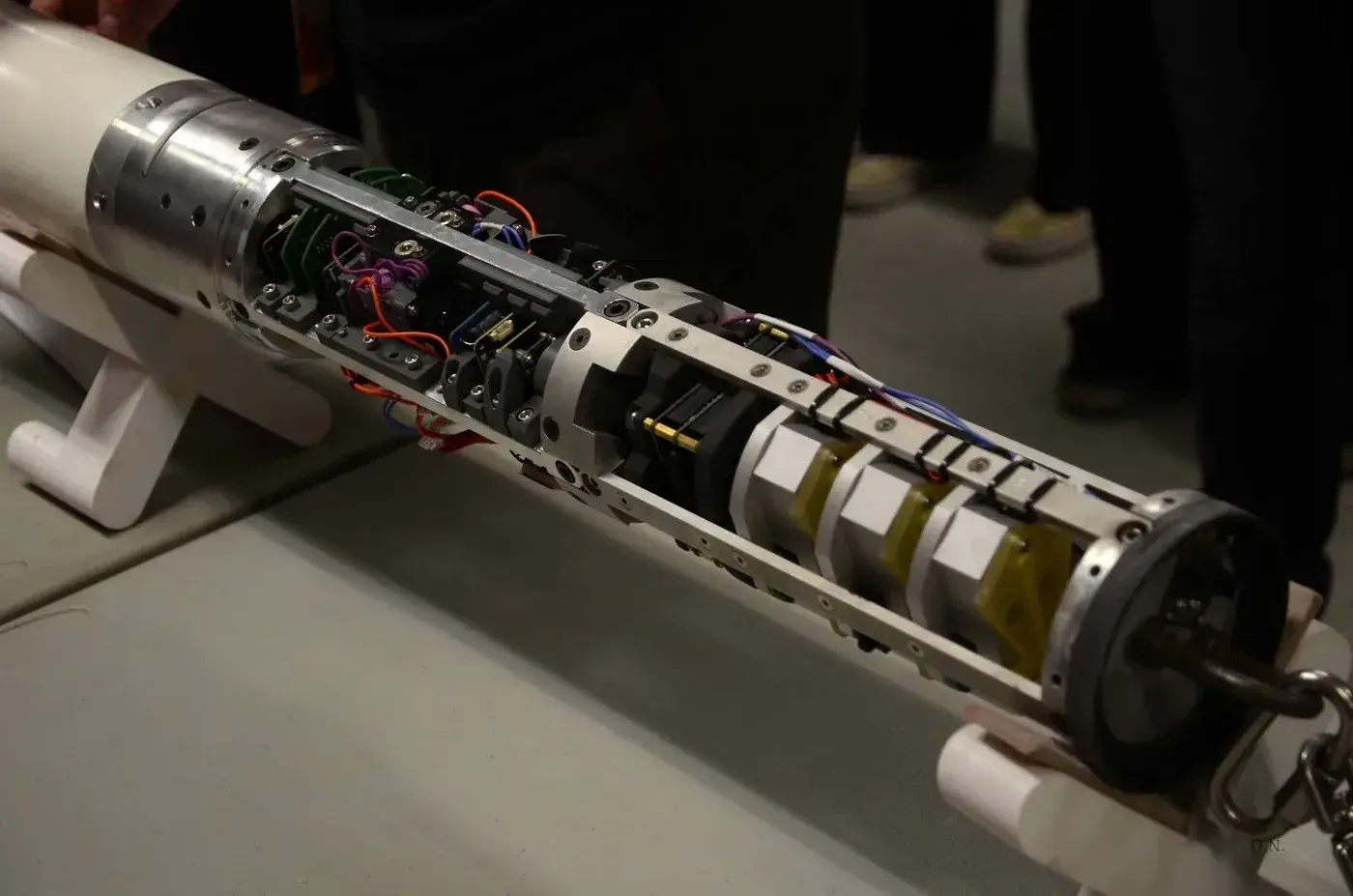
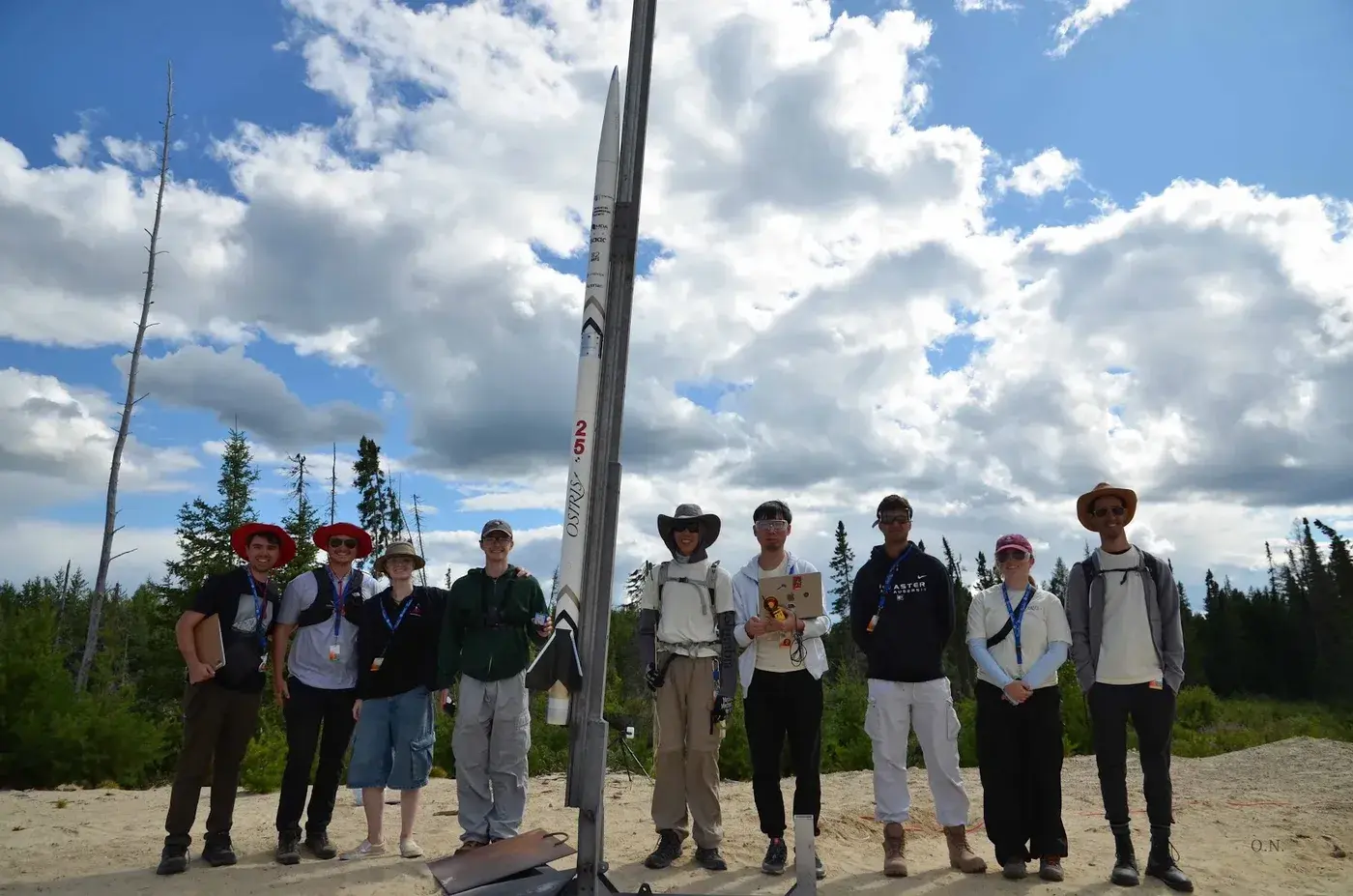
Osiris introduced two firsts for the team: functional airbrakes, and a student-designed flight computer that had already been flight-tested before competition, so we could fly it as a backup with confidence. The 101.6 mm (4 in) minimum-diameter airframe used fibreglass tubes rolled in-house, with carbon fibre tip-to-tip fin layups. It flew on a CTI O3400 (21,062 N·s), the most powerful motor in team history. Blue Raven flew as primary with Void Lake as SRAD backup, logging an apogee within 23 ft of the published figure. Dual-deploy recovery fired drogue near apogee and main at 1,373 ft AGL. Peak velocity was 642.5 m/s (Mach 1.92 at burnout).
At competition.
We hire first years.
We hire people who have never touched a rocket. Come ready to learn. We'll teach the rest.
Applications for this term are closed. Stay tuned to our Instagram for future opportunities. You don't need to be an engineer: we need people on operations as much as on airframe.